Wet, Dry, Pre-Action and Deluge: Why Your Building's Use Decides the System
Four different ways to get water onto a fire, each one solving a different problem your building already has.
September 2, 2026 · 4 min read
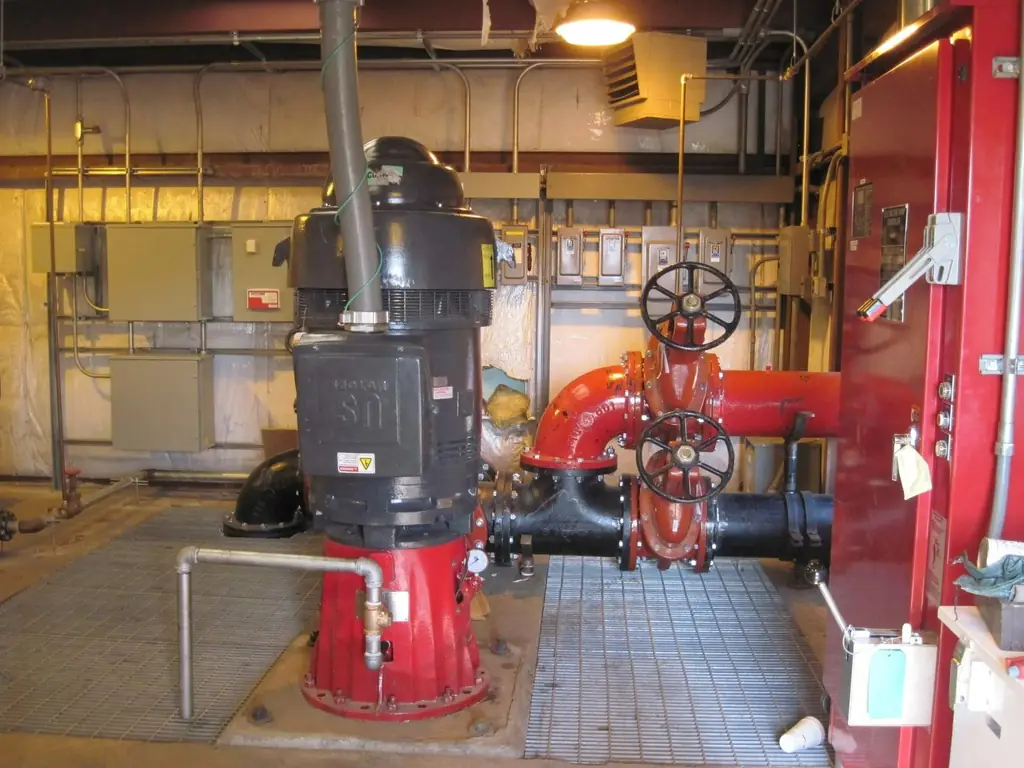
Ask a fire protection contractor which sprinkler system is best and the honest answer is that the question is backwards. The building's use, its climate exposure, and what is stored inside it decide which system belongs there. There are four main types in commercial and industrial work, and each one exists to solve a specific problem the others do not.
Wet systems, the default for a reason
A wet system is the one most people picture: pipe full of water at all times, sitting behind a sprinkler head with a heat-sensitive element. When that element reaches its rated temperature, the head opens and water is already there to come out immediately. It is the simplest, fastest-responding, and least expensive system to install and maintain, which is why it is the default choice for any heated space where the pipe is in no danger of freezing.
Dry systems, for the spaces wet pipe cannot survive
In an unheated warehouse, a parking structure, or an outdoor loading dock in North Texas, water sitting in pipe over a hard freeze is a liability, not a safety feature. A dry system keeps the piping charged with pressurized air or nitrogen instead of water. When a head opens, the air escapes first, which trips a valve that then admits water into the pipe. That sequence costs the system a few seconds of response time compared to wet pipe, which is the trade-off for not freezing solid in January.
Pre-action systems, a second layer of intent
A pre-action system adds a step before water enters the pipe at all: a separate detection event, usually a smoke or heat detector, has to trip before the valve allows water in. Only after that does the system behave like a wet or dry system waiting on individual heads to open. That extra step exists for spaces where accidental water discharge is its own kind of disaster: server rooms, archives, museums, anywhere the contents are worth protecting from the sprinkler system itself, not just from fire.
Deluge systems, all heads at once
A deluge system is built for the opposite problem, a fire that will spread faster than a head-by-head response can contain. Every head on a deluge system is open at all times, and the system relies entirely on a separate detection system to open the water supply valve. Once it does, water discharges from every head simultaneously. This is special-hazard territory: chemical processing, fuel handling, aircraft hangars, anywhere a fire could outrun a conventional system before enough heads had individually opened.
Foam suppression, deluge for fuel and chemical fires
Some deluge applications add foam concentrate to the water supply, because plain water does not extinguish every kind of fire the way it extinguishes ordinary combustibles. A foam system blankets the fuel surface and cuts off its oxygen rather than simply cooling it. This is real, specialized work, we have installed foam suppression on petroleum and chemical sites, including a foam system upgrade for a solvent manufacturer in Garland and work for pipeline and refining clients, and it is not something a general sprinkler contractor picks up as a side skill.
One building, more than one system
Some buildings run more than one system type under a single roof: a warehouse floor on wet pipe, an unheated dock canopy on dry pipe, and a server room down the hall on pre-action, each protecting a different risk in the same footprint. Sorting out which zone gets which system, and where the transition points and control valves belong, is design work, not installation work, and it happens before anyone starts running pipe.
Larger sites sometimes need water delivered to the building before any of this even starts, through a dedicated underground fire main separate from the domestic water supply. We have run private fire mains as long as 4,200 feet of underground pipe to feed a site's fire protection system, work that sits upstream of every system type described here and is easy to overlook until a hydrant flow test comes back short.
What ties all four together is that none of them is a design choice made in isolation. The occupancy, the contents, the climate, and the AHJ's requirements for that specific building determine which system, or combination of systems, is correct. Automatic Sprinkler of Texas has designed and installed all four types since 1995, with a NICET Level IV water-based systems design department behind the paperwork, and we are licensed to do this work in fourteen states. If you inherited a building and are not sure what is actually running behind the walls, that is the first question worth asking us.
Automatic Sprinkler of Texas, Inc — (972) 298-2772
Call (972) 298-2772More articles
What Actually Happens During a Commercial Fire Sprinkler Inspection
A facilities manager's guide to what a technician does during a scheduled sprinkler inspection, and why the tag on the riser matters.
Trouble, Supervisory, or Alarm: What Your Fire Alarm Panel Is Actually Telling You
Three different signals on your panel mean three different things, and only one of them means evacuate.