Why Fire Extinguisher Placement Gets Flagged, Not Just Whether One Is There
Having enough extinguishers in the building is not the same as having them in the right places.
September 2, 2026 · 4 min read
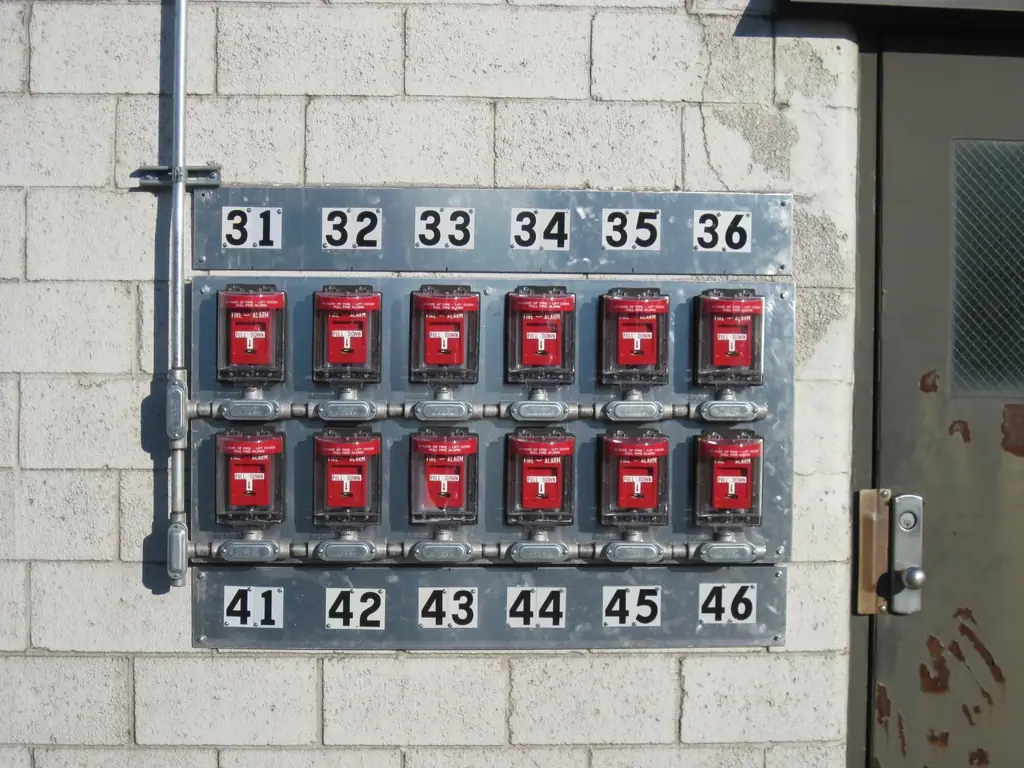
Most buildings we walk already have fire extinguishers in them. That is rarely the problem. The problem is almost always where they are, what class they are rated for, and whether anyone can reach one within a reasonable distance of wherever a fire might start. Presence is the easy part. Placement is what actually gets flagged.
Travel distance is the whole game
The core idea behind extinguisher placement is travel distance, how far someone has to walk, in a straight practical path, from any point in a space to reach an extinguisher. That distance limit is not the same for every hazard. A warehouse full of ordinary combustibles is treated differently than a kitchen with active grease fryers or a server room full of energized electrical equipment. Specific travel-distance limits and required extinguisher counts vary by occupancy and hazard class, and your AHJ or fire marshal is the authority on what applies to your specific building. The underlying principle is constant, though: an extinguisher that is technically in the building but three aisles and a locked door away from where a fire could start is not doing its job.
Class ratings are not interchangeable
An extinguisher rated for ordinary combustibles, wood, paper, cloth, is not automatically safe or effective on a grease fire, an electrical fire, or a flammable-liquid fire. Using the wrong class on the wrong fire can make things worse, not better. This is why a kitchen, a mechanical room, and an office area in the same building can legitimately need three different classes of extinguisher, sized and rated for what is actually stored or operated in each space, not just whatever unit happened to be on hand when someone last did a supply run.
Mounting height and visibility
Extinguishers are meant to be mounted at a consistent, reachable height, clearly visible, and unobstructed, not on the floor behind a pallet, and not on a hook someone can no longer find because a shelving unit went up in front of it last year. Signage matters here too. In a large warehouse or a building with a complicated floor plan, a small extinguisher tucked against a wall is invisible under stress even if it is technically within the required travel distance.
Class K, the one commercial kitchens miss
Commercial kitchens deserve their own mention, because they are the space most likely to have exactly the wrong extinguisher within reach. A standard ABC-rated unit is not adequate for a fire involving cooking oils and fats in a commercial fryer or grill. That risk calls for a Class K extinguisher, matched to a kitchen hood suppression system rather than sitting in for it, and placed close enough to the cookline to be useful in the first seconds of a flare-up.
Monthly checks versus the annual service
There are two different rhythms to extinguisher maintenance, and conflating them is a common mistake. A monthly check is a quick visual: is the extinguisher in its place, is the pressure gauge in the operable range, is the pin and tamper seal intact, is access clear. It takes a couple of minutes per unit and can be done by facilities staff. The annual service is more thorough, and depending on the unit's age and type, includes recharging, internal examination, or hydrostatic testing, work that should go to a licensed provider, not a general maintenance rotation.
Extinguishers carry their own version of the tag we mention elsewhere on a sprinkler riser: a small inspection tag, usually hanging from the handle, punched or initialed at each monthly check and stamped at the annual service. It is the same idea in miniature, a running, dated record that shows the unit has actually been looked at rather than simply hung on a wall and forgotten.
Hydrostatic testing, when it comes due, verifies the cylinder itself can still safely hold pressure. The interval depends on the extinguisher's type and construction, not a single number that applies to every unit in a building. A provider tracking manufacture dates and service history across your whole inventory is doing more for you than one simply topping off pressure and moving to the next unit.
- Right location: within the required travel distance of the hazard it protects
- Right class: rated for what is actually stored or operated in that specific space
- Right mounting: consistent height, visible, unobstructed, properly signed
- Right maintenance: a real monthly visual check, not just an annual sticker
Automatic Sprinkler of Texas handles extinguisher sales, placement, inspection, maintenance, recharging, and replacement as part of our commercial fire protection work. It is the smallest system we service and one of the most commonly mishandled, precisely because it looks simple. If it has been a while since anyone actually evaluated where your units sit relative to your floor plan, rather than just confirming they are present, that is worth a call.
Automatic Sprinkler of Texas, Inc — (972) 298-2772
Call (972) 298-2772More articles
What Actually Happens During a Commercial Fire Sprinkler Inspection
A facilities manager's guide to what a technician does during a scheduled sprinkler inspection, and why the tag on the riser matters.
Wet, Dry, Pre-Action and Deluge: Why Your Building's Use Decides the System
Four different ways to get water onto a fire, each one solving a different problem your building already has.